
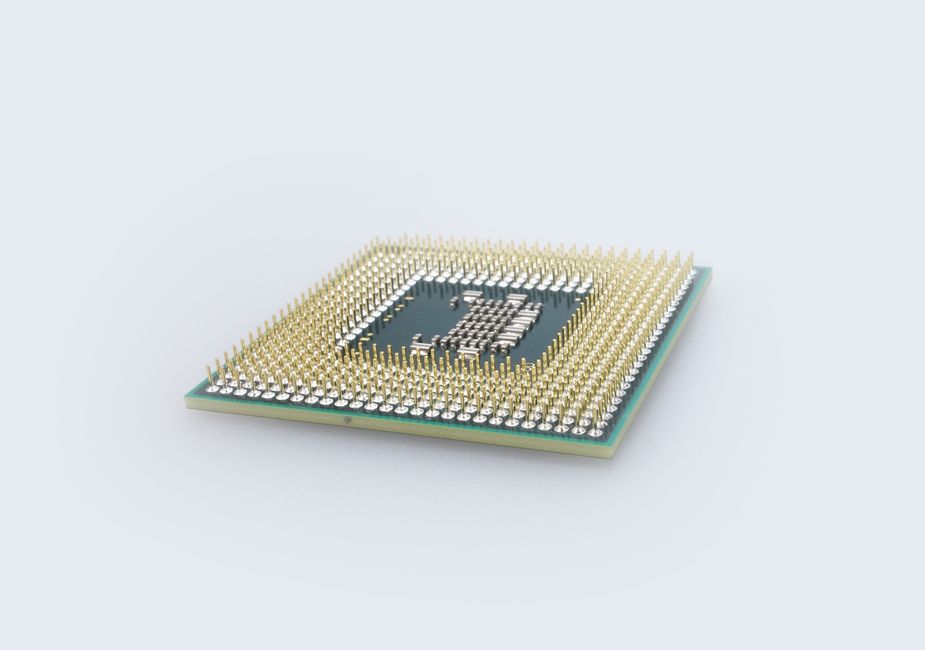
IBM recently announced a groundbreaking achievement in semiconductor technology: the world’s first sub-1nm chip technology. This milestone represents a massive leap forward in chip miniaturization, pushing far beyond the current industry standards of 3nm and 5nm processors found in flagship devices. While you won’t see this technology in your next phone upgrade, it signals a future where your devices could be exponentially faster while consuming less power and generating less heat.
The implications extend far beyond benchmark scores. This advancement could fundamentally change how you interact with artificial intelligence on your devices, how long your battery lasts during intensive tasks, and how smoothly your apps perform under heavy multitasking loads. Understanding what this actually means requires looking past the hype at the real-world impact on consumer technology.
What is a sub-1nm chip and why does it matter?
The nanometer measurement in chip design refers to the size of individual transistors packed onto a processor. One nanometer equals one billionth of a meter, roughly 100,000 times smaller than the width of a human hair. Current flagship smartphones use processors built on 3nm or 4nm process nodes. Apple’s A17 Pro chip in the iPhone 15 Pro uses TSMC’s 3nm technology, while many Android flagships run on Qualcomm’s 4nm Snapdragon processors.
IBM’s achievement pushes this boundary to below 1nm, potentially fitting even more transistors into the same physical space. More transistors mean more computing power, but the benefits extend beyond raw speed. Smaller transistors switch on and off faster, consume less energy per operation, and generate less heat during processing.
The industry has pursued smaller process nodes for decades because of these compound benefits. Each reduction in size historically delivered what’s known as Moore’s Law: a doubling of transistors roughly every two years. IBM’s breakthrough suggests this trend can continue even as many experts predicted we were approaching physical limits.
How will sub-1nm chips improve your phone and laptop?
The most immediate benefit you’ll notice is faster processing speeds without the corresponding battery drain. Current smartphones already struggle with heat management when running intensive tasks like 4K video editing or demanding games. Smaller transistors operate more efficiently, meaning they accomplish more work per watt of electricity consumed.
In practical terms, imagine editing a 4K video on your phone that currently takes 10 minutes and drains 15% of your battery. With sub-1nm chip technology, that same task might complete in 4 minutes while consuming only 8% battery. The processor would also stay cooler, meaning your phone wouldn’t throttle performance to prevent overheating.
Battery life improvements could be dramatic. If you currently get 6 hours of screen-on time with moderate use, sub-1nm chips could extend that to 10-12 hours without increasing battery size. Alternatively, manufacturers could shrink batteries to create thinner, lighter devices while maintaining current battery life.
For gaming and multitasking, the performance gains become even more apparent. Modern mobile games already push current chips to their limits. Sub-1nm technology could enable console-quality graphics on phones, support more complex physics simulations, and deliver smoother frame rates at higher resolutions. Running multiple demanding apps simultaneously would become seamless rather than causing lag and stuttering.
The AI revolution: sub-1nm chips as the backbone
Artificial intelligence represents the most transformative application of sub-1nm chip technology. Current AI features on your phone, like photo enhancement or voice recognition, either run simple models locally or send data to cloud servers for processing. This creates privacy concerns and requires constant internet connectivity.
On-device AI processing becomes genuinely practical with sub-1nm chips. The massive increase in transistor density allows for dedicated AI accelerators powerful enough to run sophisticated large language models entirely on your device. This means AI assistants that respond instantly without internet lag, photo editing that happens in real-time as you shoot, and voice translation that works offline with professional-level accuracy.
The latency reduction matters more than you might think. When your phone sends a voice command to cloud servers, the round trip takes 200-500 milliseconds. That’s the difference between an AI assistant that feels instant and one that makes you wait. Local processing with sub-1nm chips could drop response times to under 50 milliseconds, creating truly natural interactions.
Privacy benefits become substantial when sensitive data never leaves your device. Your medical questions, financial information, and personal conversations could be processed by AI without ever touching a company’s servers. This addresses one of the biggest concerns people have about current AI tools.
When will sub-1nm chips arrive in consumer devices?
Don’t expect sub-1nm processors in consumer devices for at least 3-5 years, and that’s an optimistic timeline. IBM’s achievement is a research milestone, not a production-ready product. The gap between laboratory demonstration and mass manufacturing is enormous.
Historically, the journey from prototype to production takes years. When IBM first demonstrated 2nm chips in 2021, industry analysts predicted commercial availability around 2024-2025. We’re only now seeing 3nm chips reach mainstream adoption. Based on this pattern, sub-1nm technology won’t reach consumers until 2028-2030 at the earliest.
First adopters will likely be high-margin products where cost is less critical. Expect to see sub-1nm chips in flagship smartphones from Apple and Samsung first, followed by premium laptops and workstations. Server farms and data centers might actually deploy the technology before consumer devices, as they can justify higher costs for efficiency gains.
The most realistic expectation: by 2030, flagship phones might feature sub-1nm processors, while mid-range devices use the 3nm and 2nm technology that’s cutting-edge today. Budget devices will continue using older process nodes, just as affordable phones today still use 7nm and 12nm chips.
The manufacturing challenge: from lab to mass production
Creating a single prototype chip in a laboratory differs vastly from manufacturing billions of chips profitably. The semiconductor industry measures success through yield rates, the percentage of functional chips produced from each silicon wafer. Current 3nm production has relatively low yields, with reports suggesting only 55-70% of chips work perfectly.
Sub-1nm manufacturing will face even steeper challenges. At such tiny scales, individual atoms matter. A single contaminant particle can ruin dozens of chips. The extreme ultraviolet lithography machines required cost over $150 million each and need perfectly controlled environments. Dust particles that would be invisible to the naked eye are massive obstacles at the sub-1nm scale.
Cost barriers remain formidable. Building a fabrication plant capable of sub-1nm production would cost $20-30 billion. Only a handful of companies worldwide can afford such investments: TSMC, Samsung, and Intel. Even with IBM’s breakthrough, these manufacturers must independently develop their own production processes.
Competition is intense. TSMC, the world’s largest contract chip manufacturer, supplies Apple, AMD, and Nvidia. They’re investing billions in 2nm technology and researching 1nm processes independently. Samsung has similar programs. Intel, after years of falling behind, is pushing hard to regain leadership. IBM’s announcement accelerates the race but doesn’t guarantee IBM will manufacture consumer chips. IBM often licenses its research to other manufacturers.
What about current chip bottlenecks in your devices?
While sub-1nm chips promise dramatic improvements, they won’t magically solve all performance problems. Your device’s speed depends on multiple components working together, and the slowest component creates the bottleneck.
RAM speed and capacity matter enormously. A blazingly fast processor accomplishes little if it’s constantly waiting for data from slow memory. Storage speed is equally critical. The fastest chip can’t compensate for a slow hard drive or low-quality flash storage. Many mid-range phones pair decent processors with insufficient RAM, causing lag during multitasking.
Thermal management remains a fundamental challenge. Even the most efficient sub-1nm chip generates heat when running at maximum performance. Smartphones lack active cooling systems (fans), relying on passive heat dissipation. Without better cooling solutions, phones will still throttle performance to prevent overheating, negating some benefits of faster chips.
Software optimization matters just as much as hardware. Poorly coded apps waste processing power regardless of chip technology. Operating system bloat can slow even the fastest devices. A well-optimized app on a 5nm chip often performs better than a bloated app on a 3nm chip.
Practical upgrades you can make today include adding more RAM if your device allows it, upgrading to an SSD if you’re using a hard drive, ensuring your device has adequate ventilation, and removing unnecessary background apps. These improvements deliver immediate benefits rather than waiting years for sub-1nm technology.
For smartphone users, your best move is choosing devices with sufficient RAM (8GB minimum for intensive use), adequate storage (256GB or more), and efficient cooling designs. These factors will determine your daily experience more than whether the processor is 3nm or 4nm.
What this means for your next device purchase
Should you delay upgrading your phone or laptop to wait for sub-1nm chips? Almost certainly not. The timeline is too distant, and current devices are already highly capable for most tasks. If your current device meets your needs, keep using it. If it’s struggling, upgrade now rather than suffering through years of frustration.
When sub-1nm chips do arrive, expect them in premium devices first, priced at flagship levels. The technology will eventually trickle down to mid-range devices, but that process takes 3-5 additional years. By the time sub-1nm chips become affordable, the cycle will have repeated with even newer technology on the horizon.
The real takeaway from IBM’s breakthrough is that chip innovation continues despite predictions of physical limits. This ensures your devices will keep improving in meaningful ways: longer battery life, better AI features, faster performance, and new capabilities we haven’t imagined yet. The future of computing looks bright, even if that future is still several years away from your pocket.
Looking ahead
IBM’s sub-1nm chip technology represents a remarkable engineering achievement that pushes the boundaries of what’s physically possible. While the path from laboratory to living room is long and uncertain, this breakthrough ensures that processor improvements won’t stall. Your phones and laptops will continue getting faster and more efficient, enabling new experiences that current devices can’t deliver.
The most exciting aspects might not even be predictable today. Each major chip advancement historically enabled unexpected innovations. Smartphone processors powerful enough for augmented reality, artificial intelligence sophisticated enough for real-time language translation, and graphics capable of photorealistic gaming all depended on chip advances that seemed distant when first announced.
Sub-1nm technology will likely enable capabilities we haven’t conceived yet, solving problems we don’t realize exist. That’s the real promise of continued chip innovation: not just faster versions of what we have today, but entirely new possibilities for tomorrow.
Frequently Asked Questions
What exactly is a nanometer in chip manufacturing?
A nanometer is one billionth of a meter, used to measure the size of transistors on computer chips. It’s roughly 100,000 times smaller than a human hair. Smaller nanometer measurements mean more transistors can fit on a chip, increasing performance and efficiency.
How much faster will phones be with sub-1nm chips?
While exact performance gains depend on chip design, sub-1nm technology could deliver 2-3x faster processing speeds compared to today’s 3nm chips, with dramatically better energy efficiency. Real-world tasks like video editing could complete in half the time while using 40-50% less battery power.
Can older devices benefit from this technology?
No, sub-1nm chip technology cannot be added to existing devices through updates. Chips are built into devices during manufacturing and cannot be upgraded. You would need to purchase a new device with a sub-1nm processor to benefit from this technology.
Will sub-1nm chips be expensive at launch?
Yes, devices with sub-1nm chips will likely cost premium prices when first released, similar to how flagship phones currently cost $1,000 or more. The technology will become more affordable over time as manufacturing improves and scales up, eventually reaching mid-range devices 3-5 years after initial launch.
How does IBM’s achievement compare to competitors?
IBM’s sub-1nm breakthrough is a research milestone ahead of competitors, but TSMC, Samsung, and Intel are all investing heavily in similar technology. TSMC currently leads in actual production with 3nm chips, while others are racing to commercialize 2nm and smaller processes. The gap between research and production means competitors may still reach market first.
What’s the environmental impact of smaller chips?
Smaller chips are more energy-efficient per computation, which reduces electricity consumption and heat generation during use. This can lower the environmental impact of devices and data centers. However, the manufacturing process for advanced chips requires significant energy and resources, so the overall environmental benefit depends on production scale and device lifespan.